

 My BDx
 Channel Partners


The Shift from Generative AI to Agentic AI — and What It Means for APAC Infrastructure
-

-
 Blog
Blog
-
Technology
-
The Shift from Generative AI to Agentic AI — and What It Means for APAC Infrastructure

As autonomous systems move into production, sustained inference is changing the infrastructure equation.
By Sujit Panda
Chief Operating Officer, BDx
Across Asia Pacific, AI workloads are changing shape. The first wave of generative AI was episodic — training clusters that ramped and tapered, inference that fluctuated with user demand. The next wave is continuous.
Autonomous AI systems — often described as agentic AI — are being embedded into financial services platforms, public-sector systems, and enterprise workflows across the region. These systems do not simply respond to prompts. They monitor, reason, decide, and act continuously.
For those of us building and operating digital infrastructure, that shift materially changes workload behavior. And in the conversations I’ve been having with operators, hyperscalers, and enterprise customers across the region, it’s becoming clear that the infrastructure assumptions of the last decade no longer hold.
From Burst Compute to Continuous Inference
Generative AI workloads are typically cyclical. Training clusters ramp aggressively, then taper. Inference demand fluctuates with user interaction. Agentic systems behave differently.
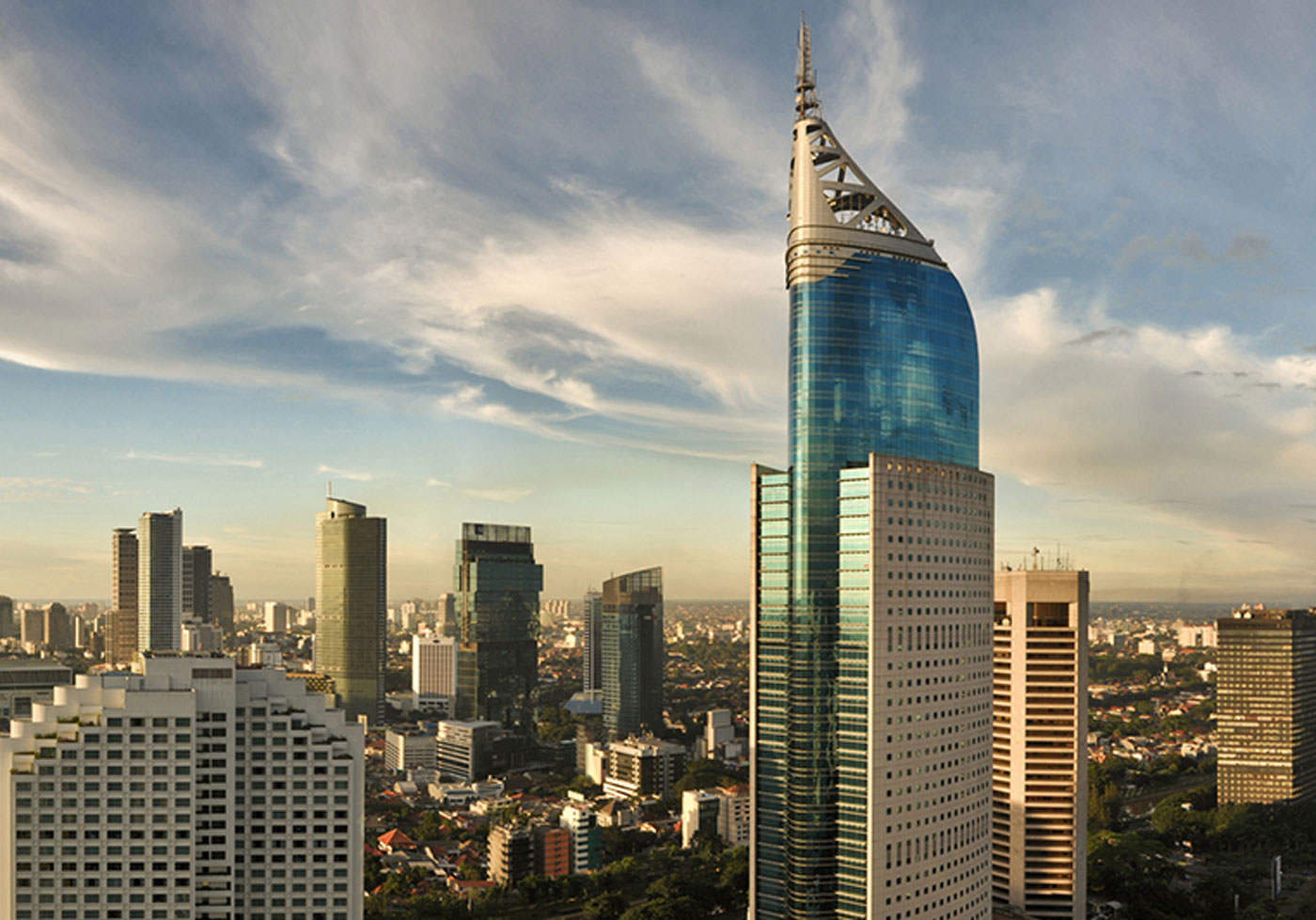
In Singapore, financial AI agents are being deployed for real-time risk analysis, compliance monitoring, and continuous market surveillance — operating within governance frameworks such as the Monetary Authority of Singapore’s FEAT principles and Veritas Initiative. In Jakarta, government AI platforms are being integrated into citizen-facing digital services — including initiatives coordinated under Kominfo and the INA Digital program — that are designed to operate persistently rather than episodically.
These deployments introduce sustained inference demand — not just peak bursts. Infrastructure must now support AI systems that remain active, stateful, and responsive in real time. This changes the load profile inside a campus, and it’s the part of the conversation I believe gets underestimated most often.
One of the most significant implications is memory intensity. Persistent AI systems maintain active context, embeddings, and tool integrations across extended reasoning cycles. In practice, agentic workloads can require three to five times higher memory-to-compute ratios than conventional generative AI batch inference — a step-change that materially shifts campus planning assumptions. Industry benchmarking increasingly shows that AI infrastructure performance is constrained by memory bandwidth and capacity as much as by accelerator count.
What I tell operators is this: instead of planning purely around accelerator count, we have to account for increased DRAM and high-bandwidth memory density per node, sustained east-west traffic within clusters, and continuous thermal load at high utilization. These were design considerations five years ago. Now they’re design constraints.
In other words, we are no longer designing for peak bursts — we must engineer for sustained performance.
APAC Grid and Latency Realities
Asia Pacific presents a distinct operating environment. Singapore manages new data center capacity within tightly defined national parameters, governed by the IMDA-led Green Data Centre Roadmap and the Data Centre — Call for Application (DC-CFA) framework. Jakarta’s data center growth is closely tied to PT PLN’s transmission and substation expansion timelines. India recorded an all-time peak power demand of approximately 250 GW in May 2024, with the Central Electricity Authority projecting continued growth in peak load through the decade.
Persistent inference workloads reduce the elasticity advantage of burst compute. Instead of occasional peaks, we have to provision for elevated baseline loads. That influences contracted capacity, redundancy modeling, and long-term energy strategy.
The International Energy Agency’s Energy and AI analysis projects global data center electricity demand to nearly double by 2030 — from approximately 485 TWh in 2025 to roughly 950 TWh — with AI as the principal driver. AI-focused facilities specifically are expected to triple over the same period, growing at roughly four times the rate of overall electricity demand — and grid-constrained markets will feel the impact disproportionately.
In this context, AI infrastructure is not simply about megawatts. It is about sustained, reliable power delivery within constrained regional grids. That’s a different engineering problem — and one APAC will feel more acutely than most regions.
Latency adds another dimension. Agentic AI systems are increasingly embedded into core operations, and financial services, digital government platforms, and enterprise automation systems require low-latency, regionally proximate infrastructure aligned with data residency requirements. APAC is not a single latency zone. It is a network of markets with distinct regulatory frameworks, grid architectures, and user density clusters. Infrastructure must be deployed where data resides and where response times meet operational thresholds. That requirement favors distributed, AI-native campuses across the region rather than retrofitting legacy facilities originally designed for cloud-era density assumptions.
Why AI-Native Campuses Outperform Retrofits
Many legacy data centers were engineered around density assumptions of approximately 5–10 kW per rack. Modern AI deployments now regularly exceed 30–50 kW per rack, with NVIDIA GB200 NVL72 configurations operating at approximately 120 kW per rack and requiring direct liquid cooling architectures.
Agentic AI compounds those stresses. Continuous inference, higher memory density, and sustained thermal load challenge power distribution systems, cooling infrastructure, and long-term scalability. Industry guidance from ASHRAE TC 9.9 and the Open Compute Project confirms that traditional air-cooled environments face practical limits as rack densities rise, with liquid cooling shifting from optional enhancement to baseline requirement above approximately 50 kW per rack.
AI-native campuses, by contrast, are designed from inception for high-density environments, liquid-ready cooling, dedicated substations, and modular expansion under constrained grid conditions. In equatorial markets, where temperature and humidity narrow performance envelopes, purpose-built infrastructure provides structural resilience. The difference is architectural. And in my experience, it’s hard to retrofit your way into it.
The shift from generative AI to persistent agentic systems is not just a software evolution. It is a workload transformation with direct consequences for power planning, density modeling, cooling strategy, and regional deployment. Across Asia Pacific, enterprises, governments, hyperscalers, and emerging Neocloud providers are planning for sustained AI operations — not just experimental bursts.
The next phase of AI will not be defined solely by model size. It will be defined by operational persistence. Infrastructure built for episodic compute will struggle to support continuous intelligence. AI-native campuses — engineered for sustained density, regional proximity, and power certainty — are positioned to meet that demand. At BDx, that’s the future we are building toward across Asia Pacific.
Prepare Your Infrastructure for the Next Phase of AI
As agentic AI systems move into production across Asia Pacific, infrastructure strategy must evolve alongside them. Sustained inference, higher memory intensity, and regional grid realities demand campuses designed for continuous performance — not intermittent peaks.
BDx develops AI-native digital infrastructure platforms purpose-built for high-density, latency-sensitive, and power-constrained APAC markets — across Singapore, Indonesia, Hong Kong, India, and beyond.
Whether you are planning a new AI deployment, evaluating capacity options across the region, or rethinking infrastructure for persistent workloads, our team can help.
Email: marketing@bdxworld.com
Visit: www.bdxworld.com
Connect: Follow BDx on LinkedIn for the latest insights on AI-native infrastructure across Asia Pacific.
About the Author
Sujit Panda is Chief Operating Officer at BDx, where he leads the operational strategy for AI-native digital infrastructure platforms across Asia Pacific. He works closely with enterprises, hyperscalers, and government partners on the design, delivery, and scaling of next-generation data center capacity in some of the region’s most dynamic markets.
For those interested in the full discussion:
https://www.frontier-enterprise.com/bdx-ceo-on-why-ai-factories-are-changing-data-centres/