From geopolitical debate to grid-level execution.
While Washington and Beijing continue to debate AI leadership, much of Southeast Asia is focused on something far more tangible: securing power, allocating land, and delivering AI capacity that is actually operational.
“Sovereign AI” today doesn’t simply mean building domestic models. It means ensuring the infrastructure underpinning AI — compute, data, energy, and operational control — sits within national borders and aligns with local regulation, security priorities, and economic strategy. It is as much about physical capacity as digital capability.
Across Asia Pacific, that concept is shifting from strategy documents to steel, substations, and live megawatts.
In 2026, BDx secured one of the largest grid power commitments in Indonesia — reinforcing that sovereign AI begins with long-term energy structuring and early grid alignment.
Governments are tightening data localization requirements and formalizing AI governance frameworks. Enterprises are reassessing where sensitive workloads are trained and deployed. Sovereign funds and state-linked entities are backing domestic GPU clusters and AI campuses.
But beneath all of this activity sits a harder constraint: energy.
Data center electricity demand is rising sharply across the region, and in several APAC markets grid allocation is becoming a gating factor. The real question is no longer whether capital is available — it is whether megawatts can be secured, contracted, and delivered on schedule.
Industry research increasingly reinforces this reality: in many APAC markets, securing grid capacity is becoming more difficult than securing land, financing, or permits.
Sovereign AI, in practice, starts with sovereign power planning.
Why this moment matters
The AI buildout is accelerating at the same time energy systems are tightening. Grid volatility, permitting timelines, renewable integration targets, and land-power pairing realities are converging. That convergence is reshaping infrastructure decisions at the national level.
This is the inflection point. Markets that secure power early and structure long-term energy agreements will shape regional AI capacity for the next decade. Markets that delay may find themselves competing for constrained grid access.
In several mature markets, grid connection timelines are now measured in years, not quarters.
Singapore’s 2026 resumption of new data center approvals came with stricter efficiency and sustainability requirements — underscoring that execution certainty now includes regulatory and environmental certainty.
Sovereign AI is not just a technology strategy — it is a timing strategy.
Execution becomes the real advantage
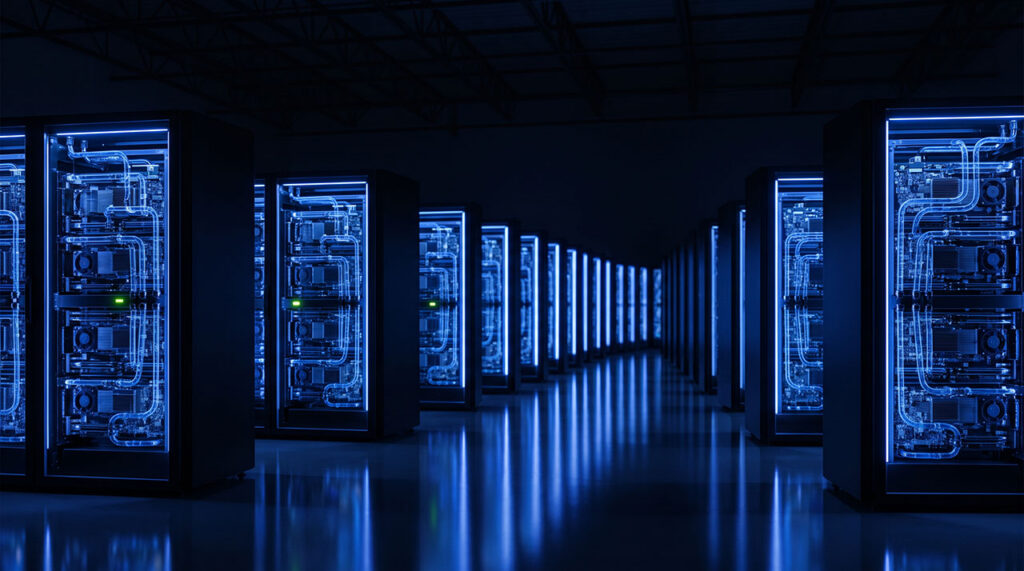
Training clusters require high-density design, stable grid connections, and long-term power certainty. Inference infrastructure requires geographic proximity, regulatory alignment, and resilient uptime. Both demand speed.
The defining advantage is not simply scale. It is execution certainty — the ability to secure grid capacity, engineer for tropical climates, and convert power into operational AI compute without delay.
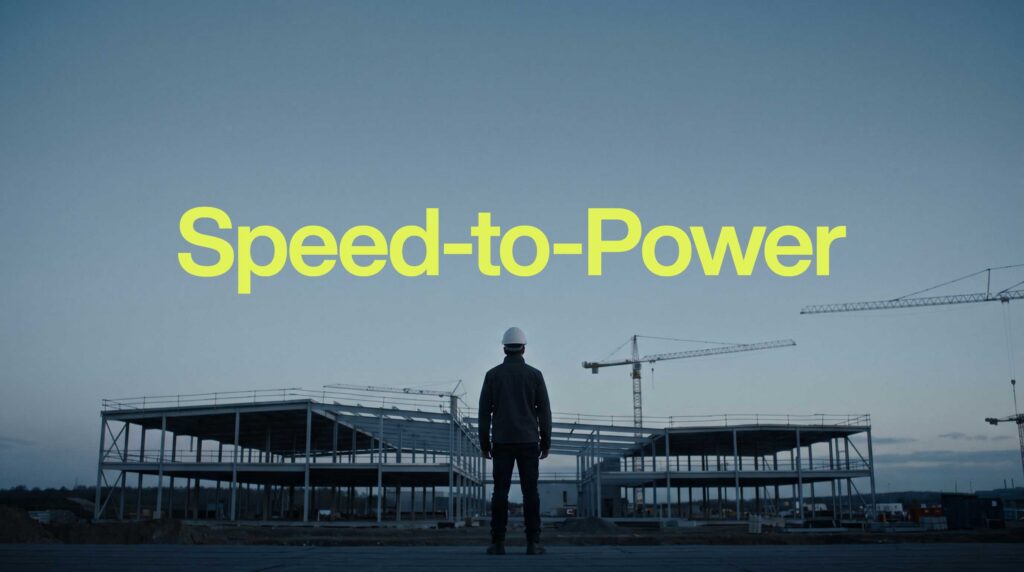
At BDx, this discipline is embedded in our Speed-to-Power approach: securing grid capacity before construction begins and deploying capital only once demand visibility is established. It is a sequencing decision as much as an engineering one — increasingly, it is the difference between infrastructure that is announced and infrastructure that is actually operating.
While global headlines frame AI as a superpower rivalry, Southeast Asia is advancing in a quieter, more pragmatic way: aligning digital strategy with energy policy, accelerating campus delivery, and embedding AI capacity into domestic systems.
The next phase of AI leadership in Asia Pacific will not be determined solely by who builds the most advanced models. It will be determined by who can build — and power — the infrastructure that runs them.
Sovereign AI is no longer theoretical. It is measured in megawatts secured, campuses delivered, and capacity brought online.
BDx sees this shift firsthand across Indonesia, Singapore, Hong Kong, and Taiwan — markets where power planning, not just demand, is shaping how AI infrastructure gets built.
What happens next
As sovereign AI becomes embedded in national economic planning, infrastructure operators will play a larger strategic role. Energy structuring, density engineering, and time-to-live capacity will increasingly influence geopolitical competitiveness.
The conversation is shifting from “Who leads in AI?” to “Who can sustain AI at scale?”
That distinction will define the next decade of infrastructure investment across Asia Pacific.
Prepare Your Infrastructure for the Next Phase of AI
As agentic AI systems move into production across Asia Pacific, infrastructure strategy must evolve alongside them. Sustained inference, higher memory intensity, and regional grid realities demand campuses designed for continuous performance — not intermittent peaks.
BDx develops AI-native digital infrastructure platforms purpose-built for high-density, latency-sensitive, and power-constrained APAC markets — across Singapore, Indonesia, Hong Kong, India, and beyond.
Whether you are planning a new AI deployment, evaluating capacity options across the region, or rethinking infrastructure for persistent workloads, our team can help.